TABLE OF CONTENTS
- Plan and Student Information Section
- Student Plan Section
- Service Plan Section
- Important Notes
- Suggested Best Practices
Plan and Student Information Section
Who Can Initiate, Develop or Change a Student's Plan of Care?
Only qualified staff may initiate, develop, or change a student’s Plan of Care
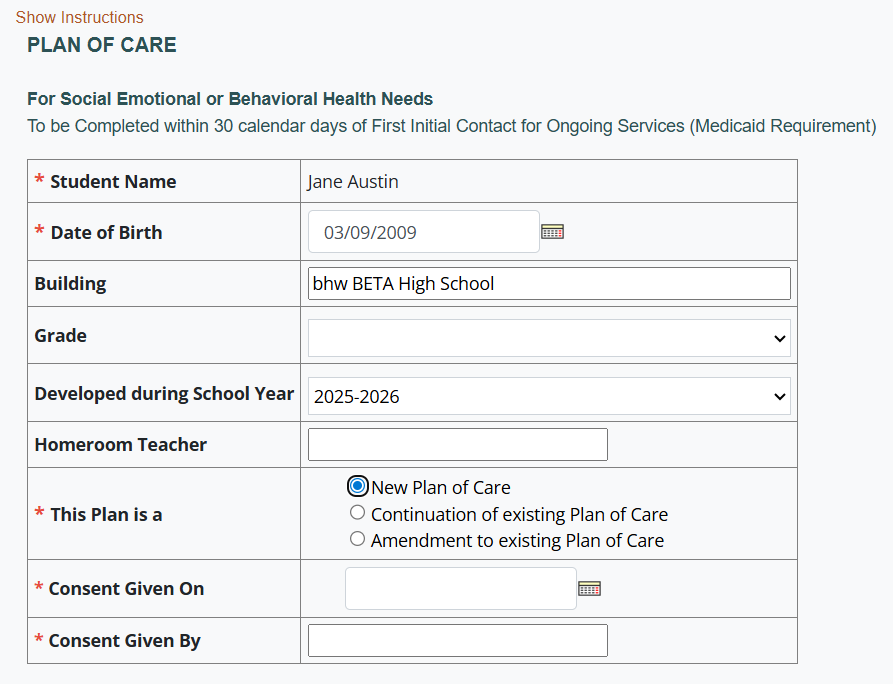
Student Name:
What is the student’s name? (Pre-populated within bhworks)
Date of Birth:
What is the student’s date of birth? (Pre-populated within bhworks)
Plan of Care Types:
New Plan of Care (POC):
New students and students that are returning to service after being discharged from previous services/POC.
Continuation of Existing Plan of Care (POC):
Students who are continuing services into the summer and/or continuing services from one school year to the next school year.
Best practice is to create a new plan of care for a new school year if a continuation of services is not taking place over the summer.
A POC must be reviewed and updated at least annually, or more frequently if the student’s condition changes or alternative treatments are recommended.
Amendment to Existing Plan of Care (POC):
Students who require changes, additions, or corrections to their POC within the current school year.
Students may also have an amended POC if they are working with a new provider (ex. provider change due to a maternity leave.) This will allow the new provider to review the POC, confirm the goals, objectives, and duration/frequency of services, and sign off on the amended plan.
Student Plan Section
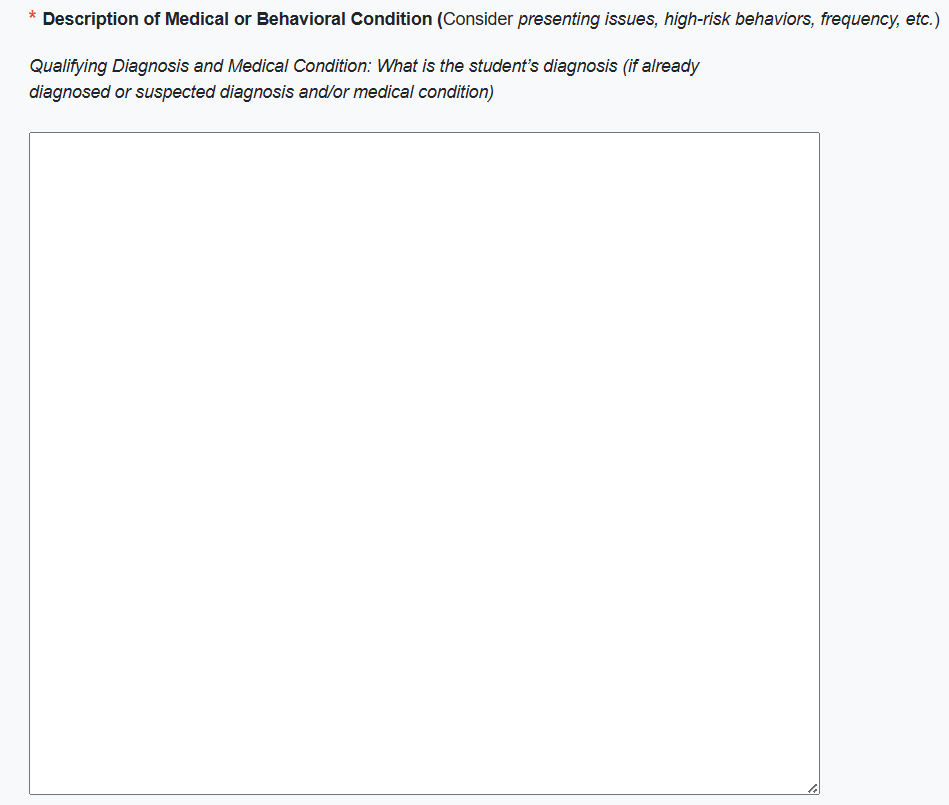
Qualifying Diagnosis and/or Medical Condition:
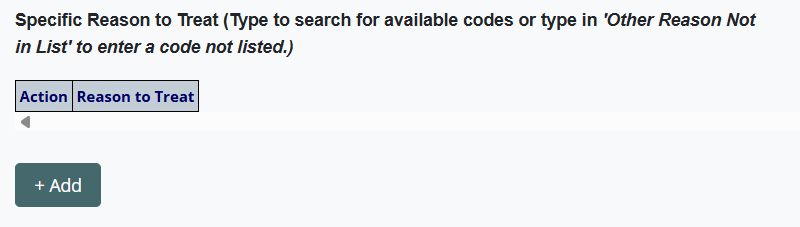
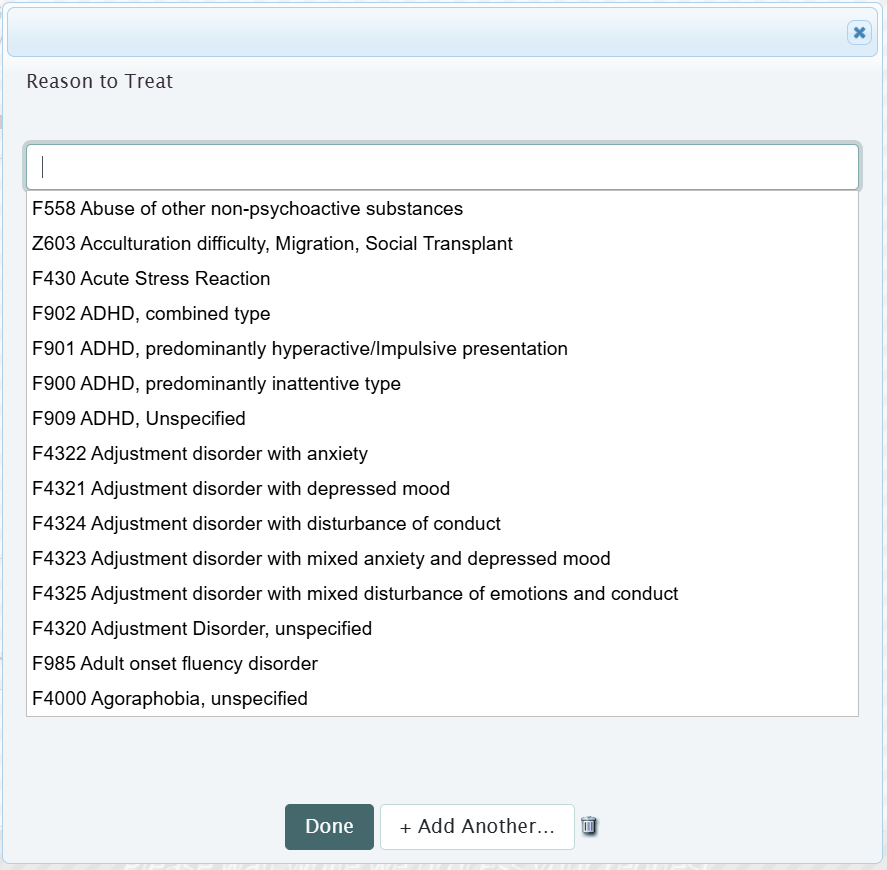
What is the student’s qualifying diagnosis or medical condition? (The specific ‘reason to treat’ is not a Medicaid specific requirement, but should be included if available.)
Based on Medicaid policy, the qualifying diagnosis (reason to treat) or medical condition must be included in the POC.
Service Plan Section
Measurable Time Related Goals:
What are the time related and measurable goals significant to the student’s function and/or mobility?
Be specific: to learn more appropriate social skills (how?), to learn how to manage symptoms of anxiety and/or depression (how?). To stay on task in the classroom due to behavior issues impeding student’s ability to learn - What will they learn and how?
Specific Long Term Goals:
This will identify specific functional achievement to serve as indicators of when the student no longer has a need for services
What will the student achieve once they no longer need your services (student meets their goals, symptoms are in good control, etc.)
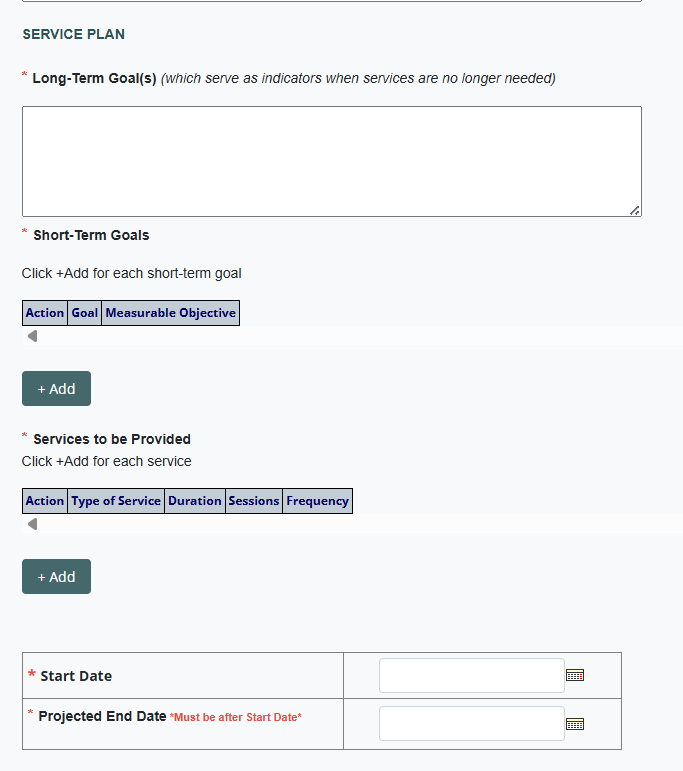
Services to be Provided:
What specific service/treatment (or multiple) will be provided to the student?
Anticipated Frequency and Duration of Treatment:
How often will you meet with the student and for how long (15 minutes? 30 minutes?) in order for the student to meet their functional goals and outcomes.
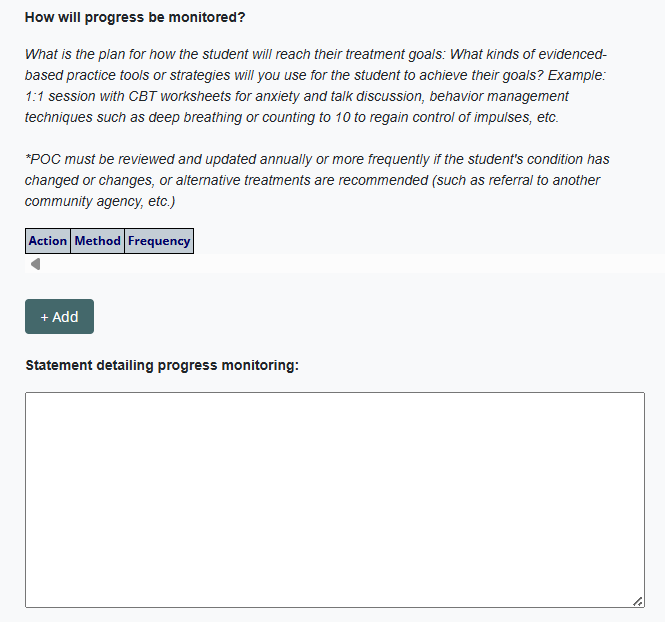
What is the Plan for How the Student will Reach Their Treatment Goals and Outcomes in the POC:
What kinds of evidenced-based practice tools or strategies will you use for the student to achieve their goals?
Example: 1:1 session with CBT worksheets for anxiety and talk discussion, behavior management techniques such as deep breathing or counting to 10 to regain control of impulses, etc.
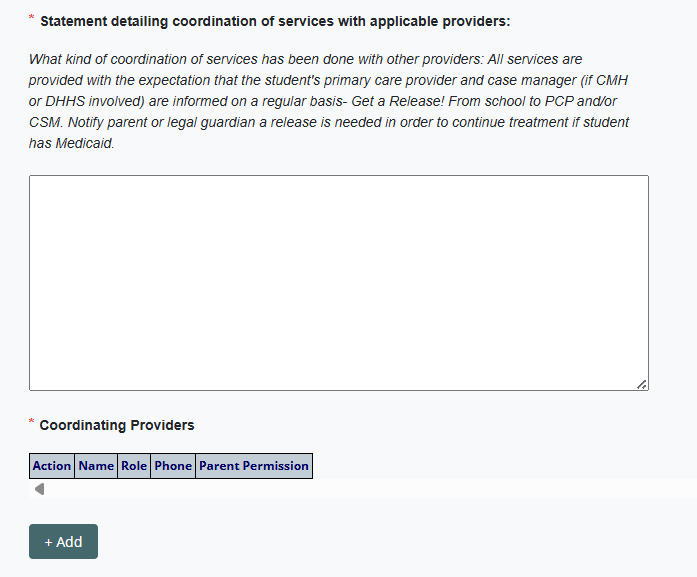
Coordination of Services with Other Providers
What kind of coordination of services has, and will, take place with other providers:
Collaboration between the school and community providers is mandated to coordinate treatment and to prevent duplication of services.
This collaboration may take the form of phone calls, written communication logs, or participation in team meetings and POC development.
If coordination cannot be established, the ISD/LEA should retain documentation of their coordination attempts.
Important Notes:
Services may be billed in the absence of a POC for up to 30 calendar days when determined to be medically necessary.
The POC must be signed, titled, and dated by a qualified medical provider prior to billing Medicaid for services. By signing the POC, the qualified medical provider is indicating that they have reviewed the POC and it is appropriate for the student’s needs. The qualified medical provider is not taking individual responsibility for the provision or supervision of services, coordination of services, or taking personal liability for the services performed.
Suggested Best Practices:
A release is necessary for communication regarding student information with outside providers.
Consent to Treat is a public health code requirement that should be in place for all students receiving services. This is an annual requirement for service provision.
Medicaid Consent to Bill is a FERPA/IDEA requirement that allows ISDs/LEAs to access and send student demographic information to obtain Medicaid eligibility benefit information. This consent is a one time consent (unless a student changes locations/counties for services) with an annual written notification requirement to parents/guardians.
Was this article helpful?
That’s Great!
Thank you for your feedback
Sorry! We couldn't be helpful
Thank you for your feedback
Feedback sent
We appreciate your effort and will try to fix the article